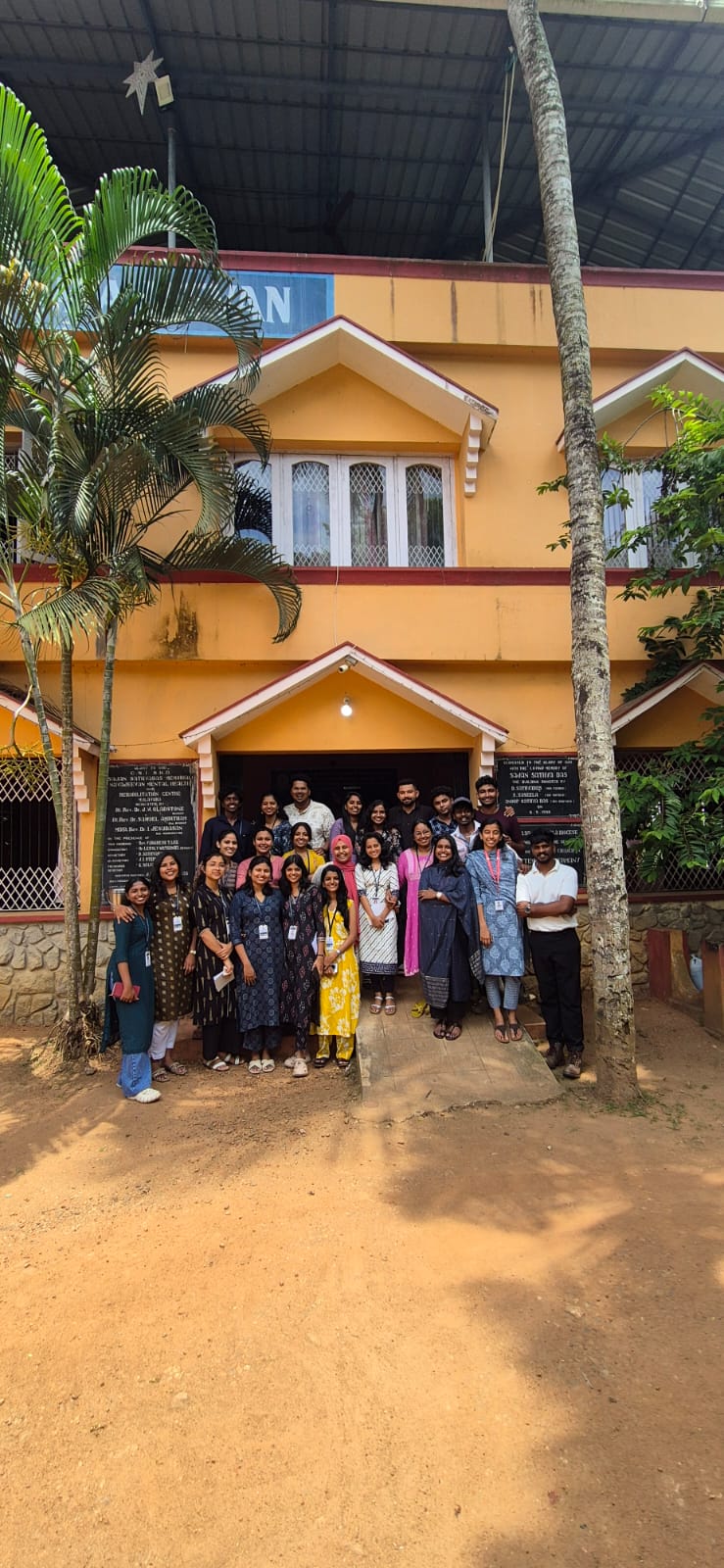
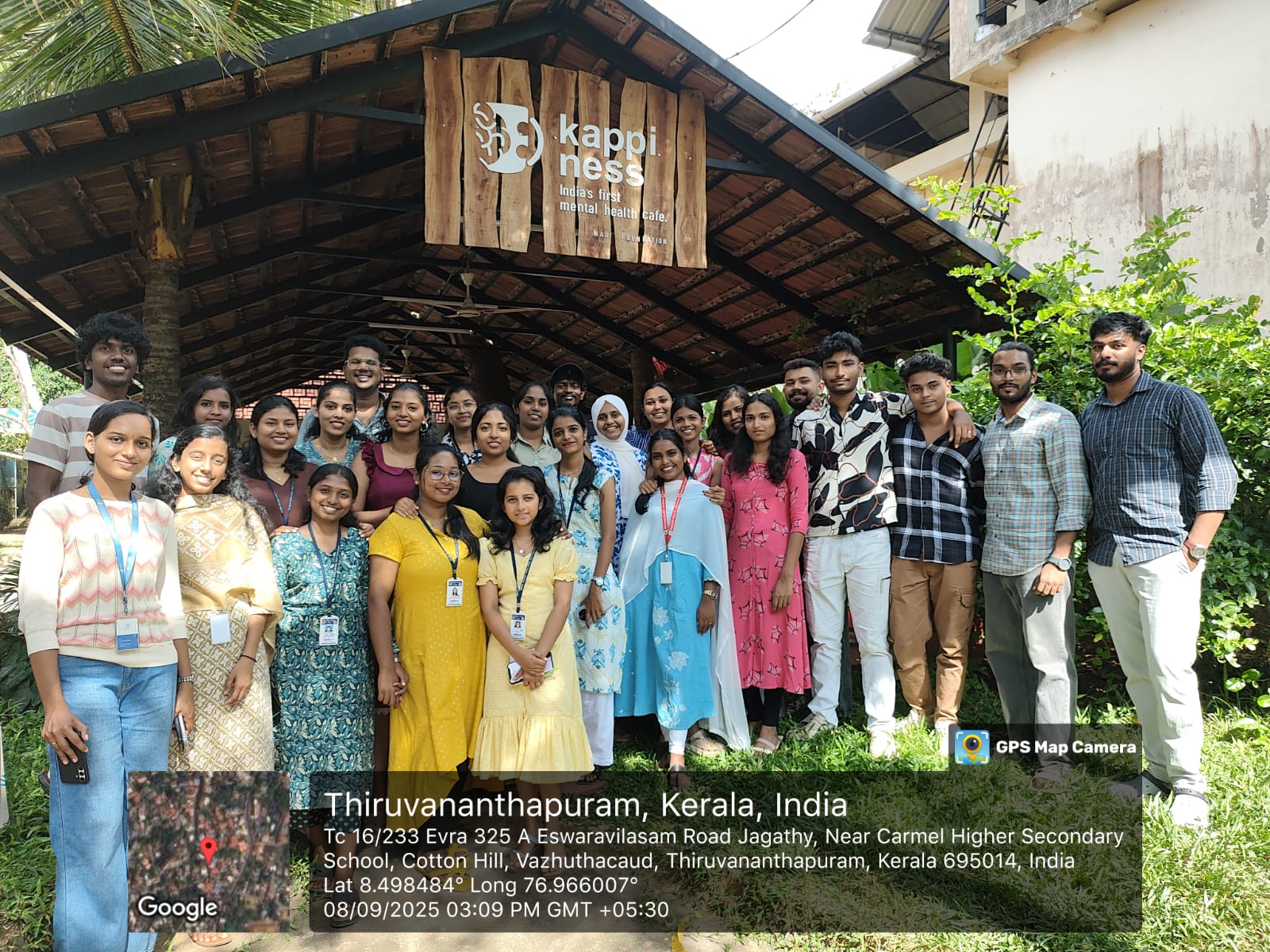
OBSERVATION VISIT - MSW 2025
As part of academic curriculum of the MSW programme, an organization visit was organized to provide students with practical insights in to the functioning of social welfare organizations. The visit aimed to enhance students understanding of institutional care, rehabilitation process and community development initiatives.
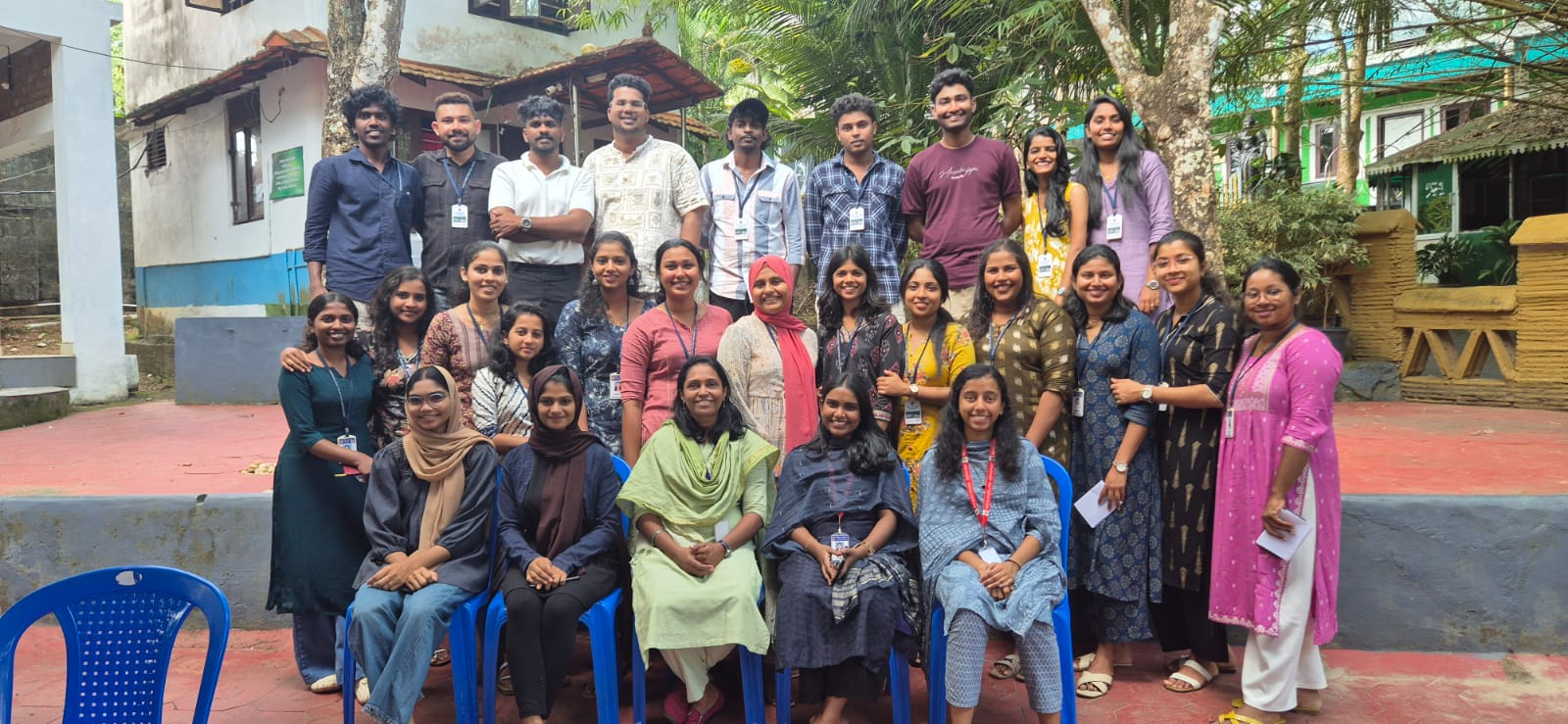
The team comprising 22 students and 02 faculty members commenced the journey from Aluva railway station on the evening of 06th August 2025 12.40 pm and concluded on 10th August 2025 morning 1 am. Visits to five reputed social welfare organizations were conducted on 07th and 08th August 2025. The team comprising 22 students and 02 faculty members.
Objectives of the Visit
• To understand the vision, mission and objectives of different social welfare organizations.
• To gain insight into the organizational structure, functioning, and service delivery models, funding of agency.
• To observe the various programs and services offered by the organizations.
• To interact with the staff, residents and beneficiaries.
• To bridge the gap between theoretical knowledge and practical application in the field of social work.
Karuna Sai De-Addiction & Mental Health Centre, Vellanad, Thiruvananthapuram (Visited on 07/09/2025)
Karuna Sai Centre works towards recovery and rehabilitation of individuals struggling with substance dependence and mental health challenges.
Key Observations:
• Structured de-addiction programs including detoxification, counselling, and relapse prevention.
• Therapeutic community model fostering peer support among residents.
• Individual and group counselling sessions with trained mental health professionals.
• Vocational training and recreational therapy as part of holistic care.
• Active follow-up system to support post-rehabilitation reintegration.
Don Bosco Nivas, Thiruvananthapuram (Visited on 07/09/2025)
Don Bosco Nivas provides shelter, care, and rehabilitation for street children, orphans, and youth in vulnerable situations.
Key Observations:
• Shelter home facilities offering safe accommodation, food, and healthcare.
• Focus on education through formal schooling and non-formal learning opportunities.
• Life skills and personality development sessions to empower children.
• Recreational and cultural activities for holistic development.
• Collaboration with schools, NGOs, and government departments for child protection.
SSM Navajeevan Mental Rehabilitation Centre, Thiruvananthapuram (Visited on 07/09/2025)
SSM Navajeevan provides residential care and psychosocial rehabilitation for individuals with chronic mental health conditions.
Key Observations:
• Structured daily routines including self-care, therapy, and vocational activities.
• Psycho-social interventions such as counselling and occupational therapy.
• Skill training in tailoring, handicrafts, and gardening to promote independence.
• Family counselling sessions to strengthen reintegration efforts.
• Partnerships with hospitals and social work institutions for ongoing support.
Pallium India, Thiruvananthapuram (Visited on 08/09/2025)
Pallium India is a leading palliative care organization committed to improving the quality of life for patients with life-limiting illnesses.
Key Observations:
• Home-based palliative care services integrating medical, psychological, and spiritual support.
• Training programs for caregivers, healthcare professionals, and community volunteers.
• Emphasis on pain management and holistic care.
• Advocacy for palliative care policies at state and national levels.
• Community-based approach involving families and local support systems.
Nadi Foundation, Thiruvananthapuram (Visited on 08/09/2025)
Nadi Foundation focuses on social development programs, with special attention to women, children, and marginalized communities.
Key Observations:
• Women empowerment initiatives through self-help groups and microfinance.
• Child development programs including early education and nutritional support.
• Awareness campaigns on health, environment, and social rights.
• Skill development workshops for youth to promote employability.
• Networking with NGOs and local governance bodies for sustainable community development.
Interaction with the Organization’s Staff
The students had an interactive session with key staff members, including social workers, program coordinators, and administrative personnel. During the visit, the staff warmly welcomed us and provided a detailed orientation about the vision, mission, and activities of the organization. They explained the various programs and services in a structured manner, highlighting the challenges they face and the strategies adopted to overcome them. The staff also shared real-life experiences of beneficiaries, which helped us understand the impact of their work. They patiently clarified our queries and emphasized the importance of community participation and teamwork in achieving their goals. The interaction was highly informative and enriched our understanding of rehabilitation and social development practices.
Student Reflections
The students found the visit to be highly informative and enlightening. Some of their key reflections include:
• The observation visits provided exposure to a wide range of social work fields, including mental health rehabilitation, de-addiction, palliative care, child protection, and community development.
• The focus on skill development, psychosocial counselling, and livelihood opportunities highlighted how interventions aim for sustainability rather than temporary relief.
• Observed the role of community participation, networking, and collaboration in ensuring effective service delivery.
• Different models of care (institutional, community-based, and home-based) broadened understanding of diverse intervention strategies.
• The visits strengthened our motivation to engage meaningfully in social work, emphasizing the need for patience, compassion, and innovation in addressing social issues.
Conclusion
The organization visits provided the MSW students with valuable insights in to the functioning of various organization. The experience was instrumental in enhancing their understanding of the practical aspects of social work and encouraged them to think beyond theory and understand the value of holistic care, community participation, and sustainable development. The visit also inspired the students to contribute meaningfully to the welfare of society in their future professional endeavours. Overall, the experience motivated them to grow as responsible professionals who can contribute positively to society.


.jpeg)